we-should-be-software
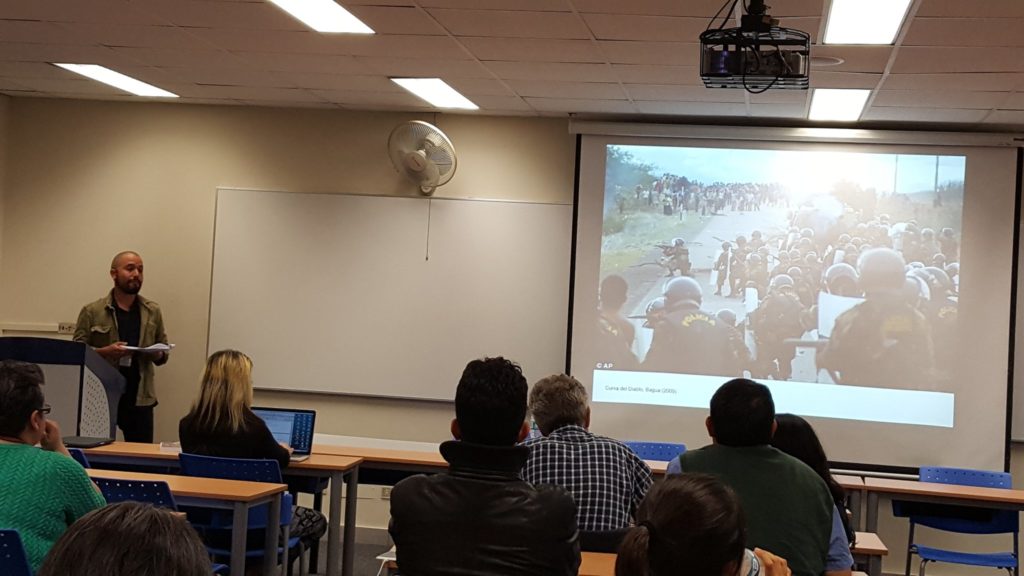
Transcript and slideshow of a paper presented at the 2013 Neil Postman Graduate Conference

— Download Presentation Text with Images (English)
— Descarga Texto de la Presentación (Español) — ¡Muy Pronto!

Abstract

In recent years, Latin America has witnessed the appearance of various “cultural networks” composed of arts and culture organizations, directly influenced by digital media and networked technologies. These networks have impacted policy spaces while forming alternative circuits for cultural production, consumption and valuation, within their countries and across national boundaries. They can be understood as a reaction to vertical cultural policy-making (generally focused on the promotion of fine arts and archaeological heritage) and widespread institutional opacity and government centralization in the region. Cultural networks advance a plurality of socio-political agendas and broaden the spectrum of collective aspirations surrounding culture and its relationship to social development. Continue reading

The following is the slideshow I used for my presentation as Research Associate of the Trauma and Global Health Program, at the Global Health Research Initiative: Teasdale-Corti Program Symposium “Innovations in Global Health Research” - Global Social Justice and the Social Determinants of Health: Setting the Course for the Future, which took place in Ottawa on October 1-3, 2012:


Last year, I presented a paper called “The Promise of Cultural Networks: Towards a research framework for the study of region-specific cultural network ecosystems” at the Cultural Trends Conference “In Search of Cultural Policy” that took place in London, UK.

Here is the PowerPoint presentation I used during my presentation in London, and the abstract of a paper I recently wrote, based in this material: Continue reading

[Abstract in English]  [Sumilla en Español]

Arts, Culture and Technology: The political/policy link

Open session by Mauricio Delfin

The intersection between arts, culture and technology can sometimes be very abstract, and other times too concrete. Generally, the most popular link connecting all notions is one found in media and electronic arts. Other times, this link is perceived at a very functional level, in terms of how new technologies (Web 2.0, etc.) can allow us to manage our arts projects more efficiently. However, little attention is paid to the role new technologies have in the democratization of arts and cultural policies, through the constitution of new and expanded citizenships, based on new ideals of greater transparency achieved through technological means, increased communication between authorities and citizens, “open data” protocols and the generation of mechanisms to achieve effective civic consultation on cultural issues. Technology and culture should also be understood as a creative and political intersection. Politicizing technology and its potential uses in the arts and cultural policy realm is important, as it stops technology from becoming a common-sense issue and a fashionable term, rendering this intersection as a critical horizon for social intervention.

Artes, Cultura y Tecnología: El vínculo con las políticas/con lo político
Sesión abierta a cargo de Mauricio Delfin

A veces la intersección entre las artes, cultura y tecnología puede ser muy abstracta y otras veces demasiado concreta. Generalmente, el vínculo que conecta a todas estas ideas suele verse reflejado en las artes electrónicas/mediales. Otras veces, el vínculo se percibe a un nivel muy funcional, en términos de cómo algunas nuevas tecnologías (Web 2.0) nos pueden ayudar a gestionar nuestros proyectos más eficientemente. Sin embargo, se presta poca atención al rol que las nuevas tecnologías pueden jugar en la democratización de las artes y las políticas culturales, a través de la construcción de ciudadanías nuevas y expandidas, basadas en ideales de mayor transparencia lograda a través de medios tecnológicos, mayor comunicación entre autoridades y ciudadanos, protocolos de datos abiertos (open data) y la generación de mecanismos para lograr la consulta ciudadana efectiva sobre asuntos culturales. Tecnología y cultura deben ser entendidas como una intersección creativa y política. Politizar la tecnología y su uso potencial en las artes y el campo de las políticas culturales es importante, pues evita que la tecnología se convierta en un asunto de sentido común y un tema “de moda”, convirtiendo a esta intersección en un horizonte crítico para la intervención social.

* Diapositivas en inglés.

October 5th, 2011 | Open Session:
“Arts, Culture and Technology: the policy/political link”

5th World Summit on Arts and Culture
Theme: “Creative Interscctions”
Melbourne, Australia
View all Summit presentations here.
http://www.artsummit.org/