MAURICIO DELFIN is an artist and an international expert in cultural policy, civil society, and civic technologies. He has a social science, arts management, and information system design background for socially engaged cultural projects. His interests include the evolving notions of cultural democracy and cultural justice. Mauricio’s research and advocacy projects focus on the relationship between civic engagement and open cultural governance.
A member of the EU/UNESCO Expert Facility, Mauricio has been a Research Associate for Tándem, a cultural policy think-tank (2011-2015), and a Research and Development strategist for La Factura, a civic software company (2012-2015). He received the Vanier Scholarship in 2014, became an OAS Open Government Fellow in 2015, and a Next Generation Fellow for the Latin American Initiative for Open Data in 2020. As technical secretary of the Peruvian Alliance of Cultural Organizations (APOC), he coordinated the co-creating strategy for the organization’s first governance and operating protocols from 2017 to 2019 and the first and second versions of the Agenda for Shared Advocacy (AIC).
A cultural manager and activist with experience in arts and cultural policy advocacy, Delfin was co-founder and director of Realidad Visual (2001-10), a Peruvian media arts organization, the Peruvian National Summit of Culture (2011-14), and Culturaperu.org (2009-15), a Cultural Information System designed and maintained by civil society. As director of Asociación Civil Solar, he leads projects that promote open government principles and practices in the arts and cultural sectors.
Mauricio holds Joint Honors in Anthropology and International Development Studies from McGill University and an MA in Media, Culture, and Communication from New York University. He is a research associate at the Center for Artistic Activism and a member of the Artistic Activism Research Co-Lab. He is also co-founder and Co-Director of the Culture and Arts Policy Institute in New York City.
Recent News
- Dumbo Open Studios 2026
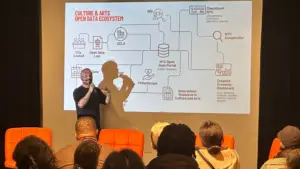
- The State of Open Data in New York City Culture and Arts Ecosystem
- BRIClab Contemporary Art Residency
- The Social Determinants of Civic Space in the Culture and Arts Sector
- Back from Seoul: 10th World Summit on Arts and Culture
- Participation is a Spectrum
- Building Collective Power: Facilitating the first NYC Borough Arts Councils Retreat
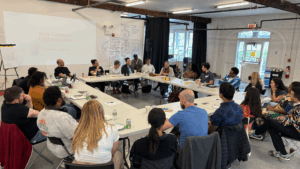
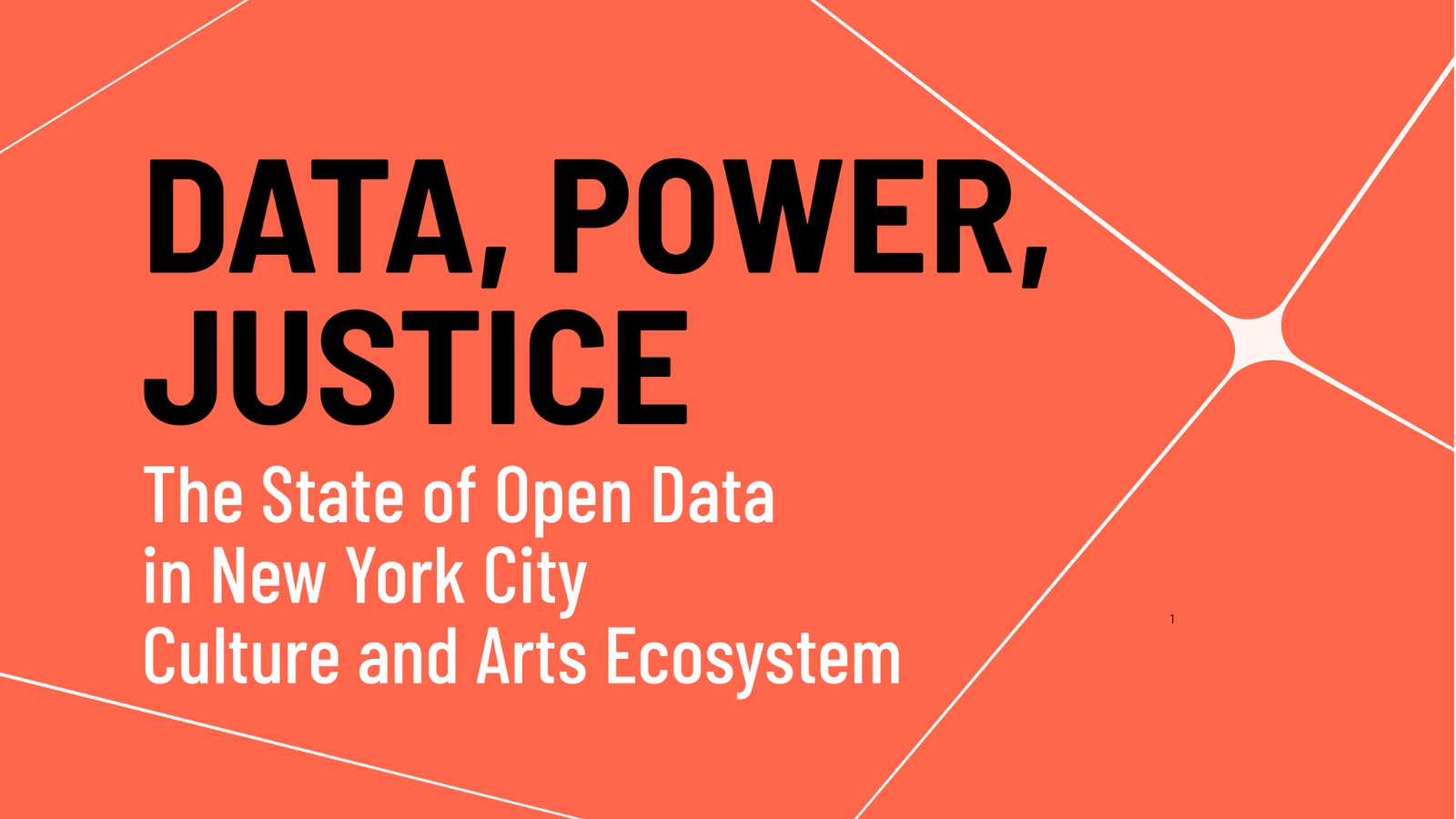
- Presentation: Data, Power and Justice
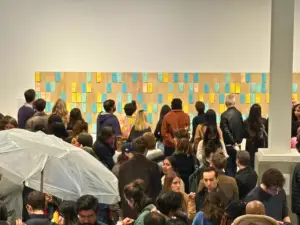
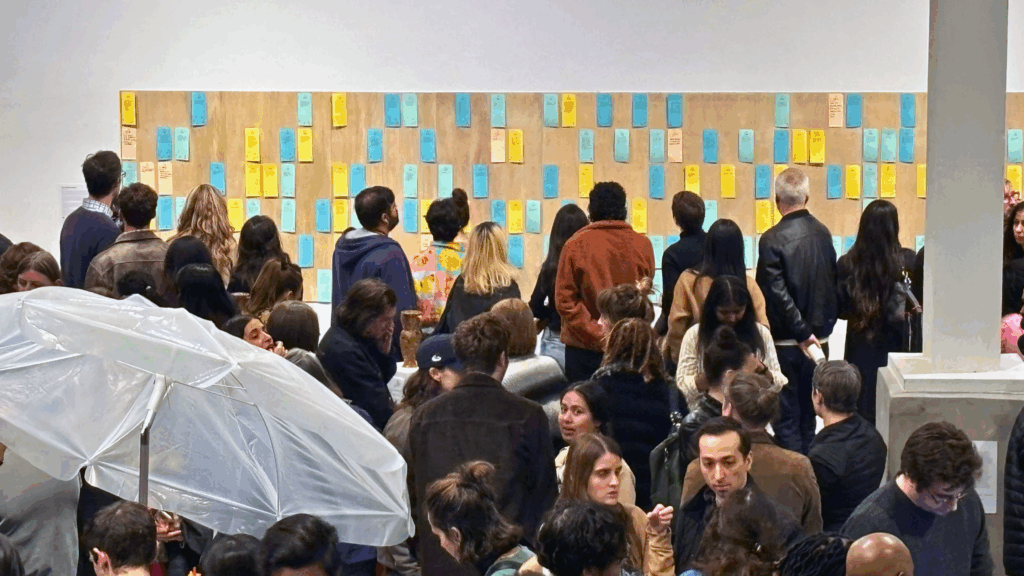
- The Timelines Project at BRIC