Council, 2026
By Mauricio Delfin (Lima, 1979)
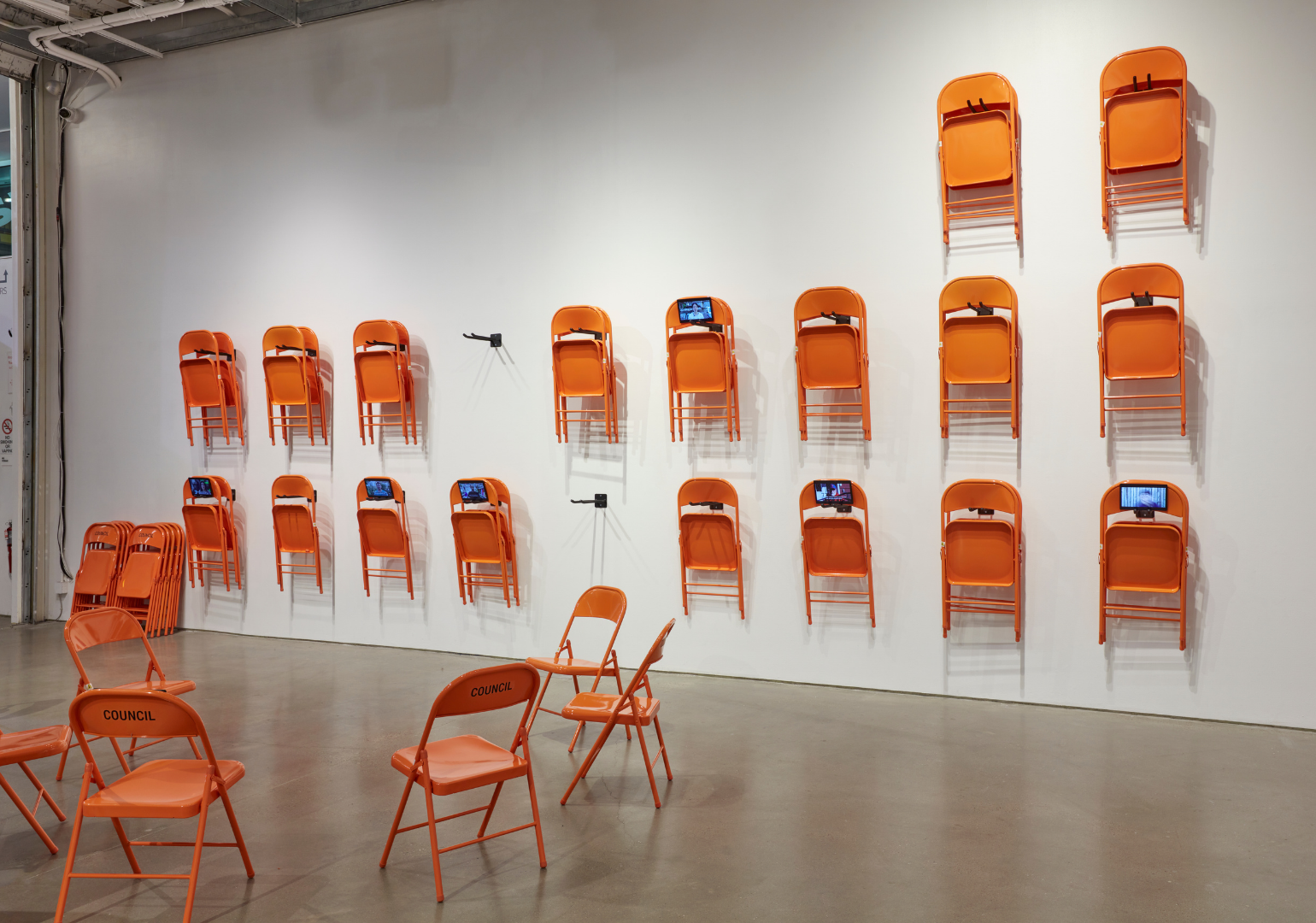
Multichannel video installation
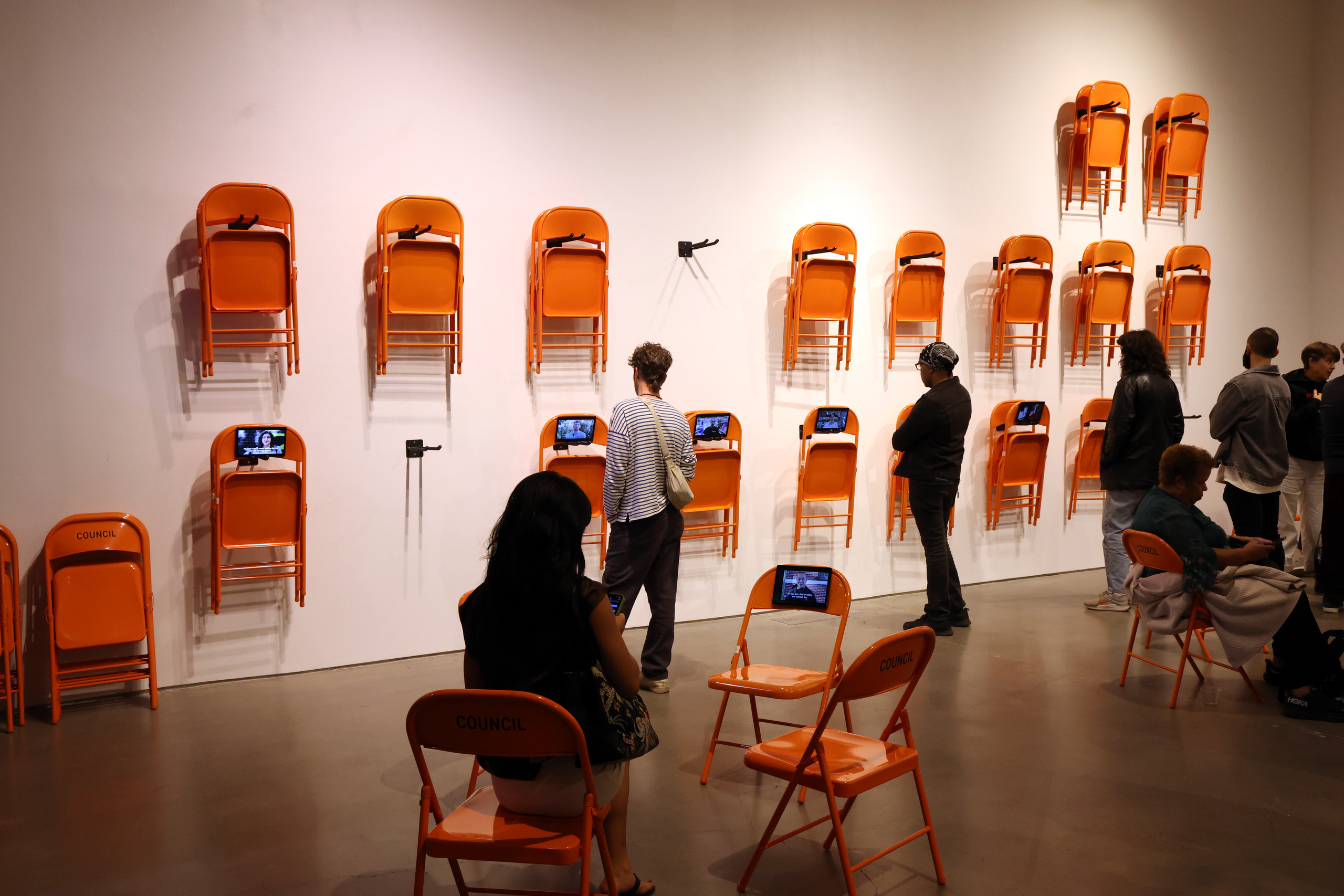
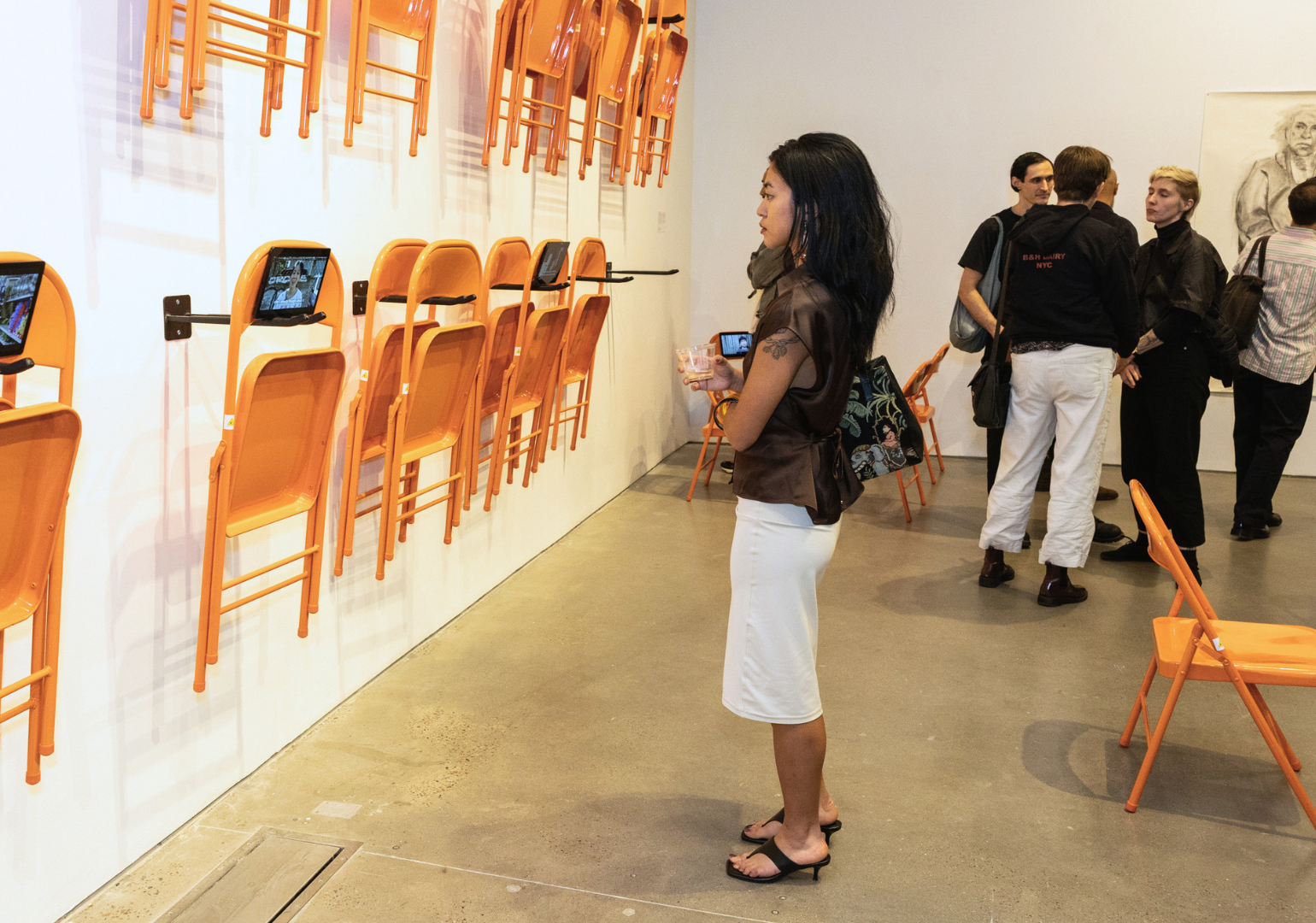
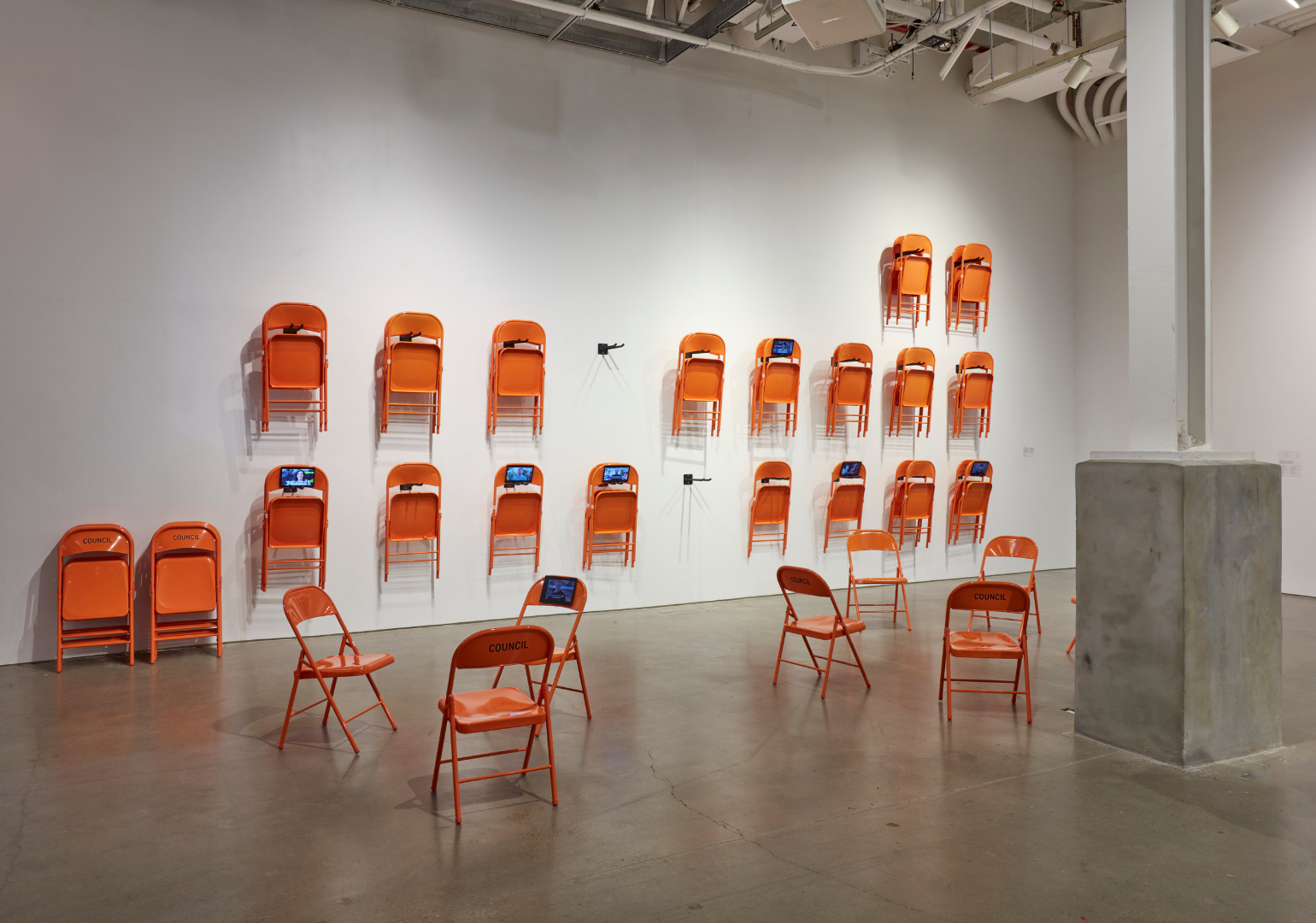
51 folding chairs, digital screens, video, sound
Variable dimensions
ON VIEW at BRIC House:
From the BRIClab: Works from the 2025-26 Artist Residencies
10/20/26 – 12/12/26
About Council
[English]
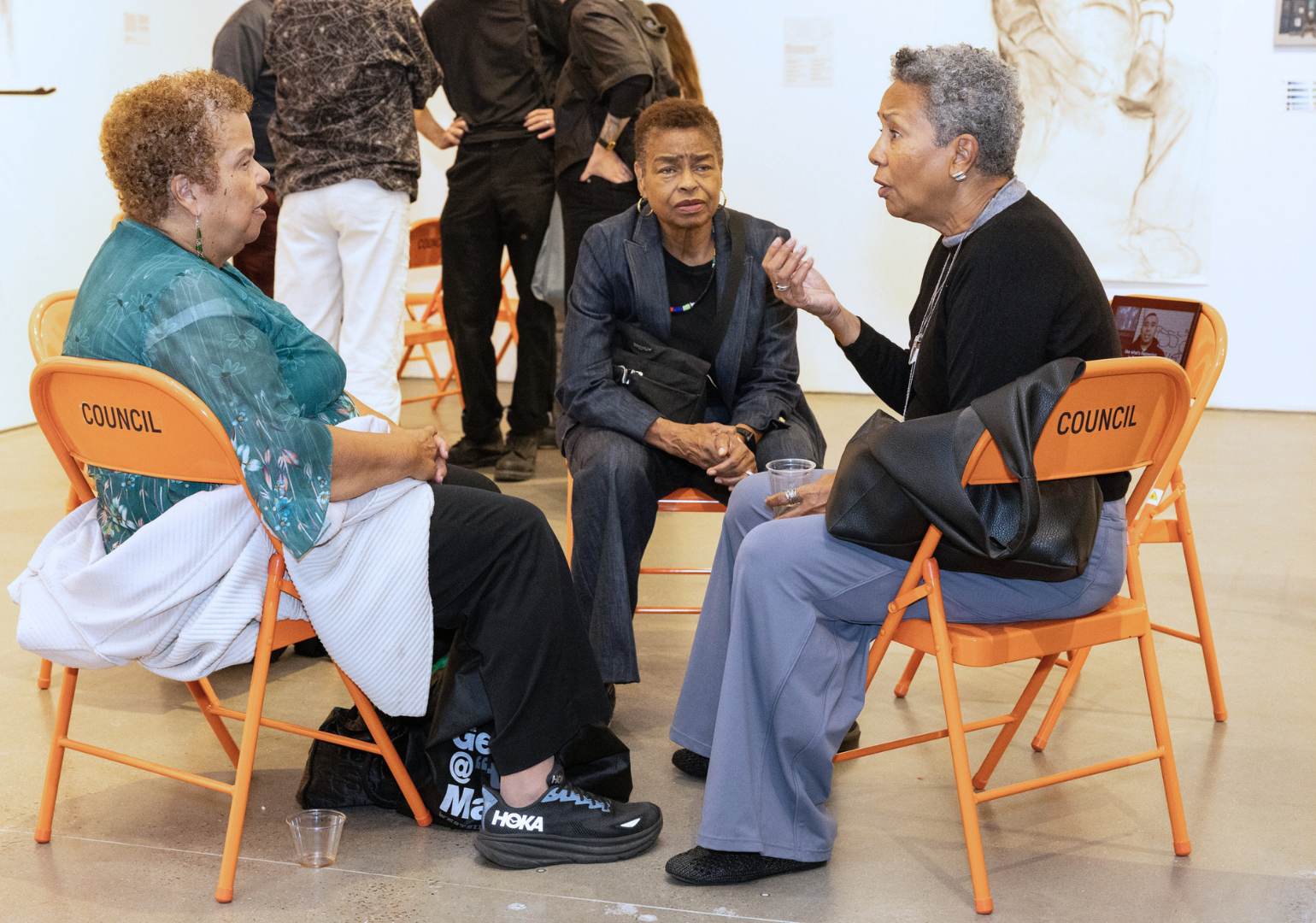
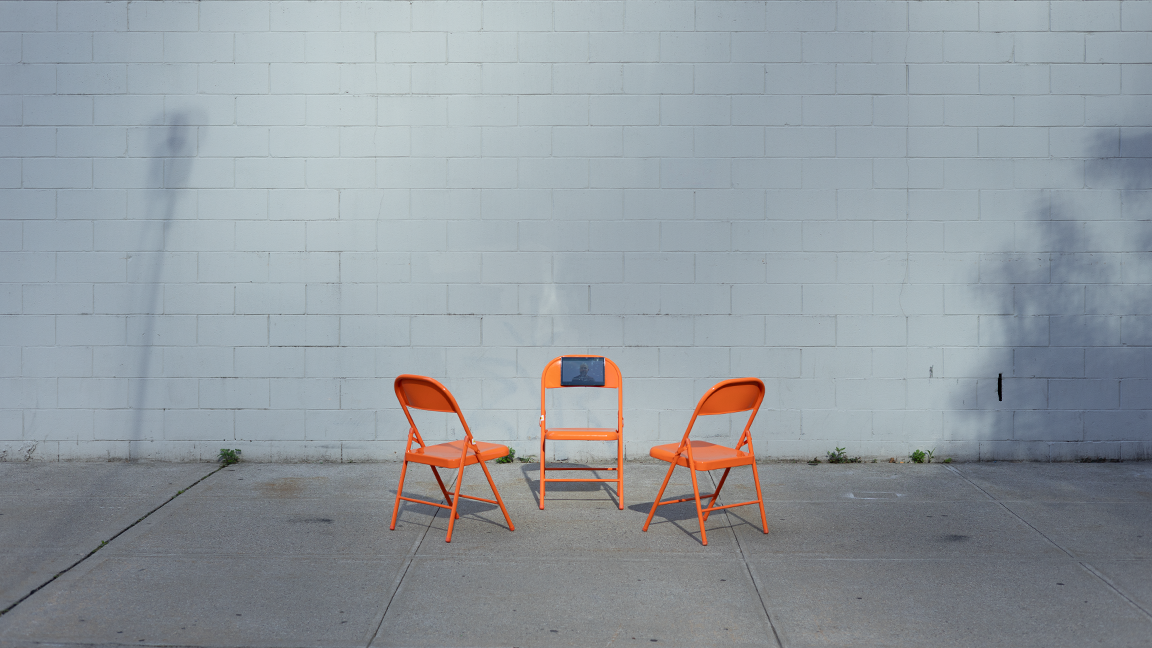
Delfín’s work brings personal experience and memory into conversation with larger questions about cultural life, history, and public policy. In Council, fifty-one folding chairs, one for each New York City Council district, hold screens where New Yorkers reflect on moments when art or culture touched their lives in a meaningful way, and what the city should do so that everyone can have experiences like these. Together, their responses ask what it means to treat culture as a public good, and how people can participate in shaping it.
The folding chairs recall the familiar spaces of community meetings. They have no fixed arrangement and can be moved, gathered, and used. Visitors are invited to reorganize them, allowing the space itself to change through participation. Chairs may also be used for gatherings or conversations within the gallery. Please return them to the installation afterward.
[Español]
La obra de Delfín pone en diálogo la experiencia personal y la memoria con preguntas más amplias sobre la vida cultural, la memoria y las políticas públicas. En Council (Consejo), cincuenta y un sillas plegables, una por cada distrito del Concejo Municipal de Nueva York, sostienen pantallas en las que neoyorquinos reflexionan sobre momentos en que el arte o la cultura marcaron sus vidas de manera significativa, y sobre lo que la ciudad debería hacer para que todas las personas puedan tener experiencias como estas. En conjunto, sus respuestas abordan qué significa tratar la cultura como un bien público y cómo las personas pueden participar en darle forma.
Las sillas plegables evocan los espacios familiares de las reuniones comunitarias. No tienen una disposición fija y pueden moverse, agruparse y usarse. Se invita al público a reorganizarlas, de modo que el propio espacio cambie mediante la participación. Las sillas también pueden usarse para reuniones o conversaciones dentro de la galería. Por favor, devuélvalas a la instalación después de usarlas.
Council, 2026
Instalación de video multicanal
51 sillas plegables, pantallas digitales, video, sonido
Dimensiones variables
These are the transcripts of Council voices, in no particular order and with no names attached.
1
One instance I can think of how arts moved me personally was when I was a, a child living in Florida, actually, and I visited a pet store. Um, and it was behind like a Winn-Dixie supermarket, and I was probably maybe 11 or 12 years old, and then the beauty of the fish tanks just caught my attention, and then the way that they designed the fish tanks and the different colors, it, it definitely was a piece of, piece of art, piece of work.
Um, and I think that got me into the hobby of fish keeping, as well as aquascaping and, and decorating and nature itself. Um, and that propelled me to do other things, and I see that as an art form, as beauty, um, as creativity, a- as a way to express yourself. As far as we go, as a community, as New York, as a city, as a state, whatever you wanna call it, it’s all around us.
We just have to get off our phones. If it’s not just nature, if it’s a mural that someone might, might have done in the neighborhood, um… And every day I get to experience that just riding my bike to work, going through Bed-Stuy, going through Green Point, going through Williamsburg, um, seeing the different churches and the artwork in the church, the murals of Mandela.
Um, it’s, it’s, it’s literally everywhere. You just have to pay attention to it, appreciate it, embrace it. Every day, people walk through these doors, and I have conversations, and we always have something in common, and it’s just through those conversations, pointing out certain things, and it’s, it’s literally all around us.
And even on your phone, you can use your phone to find forms of art, but just appreciating it, stepping out these doors, um, especially on this block itself, there’s so many churches. It’s, it’s so many old buildings, historical buildings, and just appreciating having a conversation with each other about it, and you might not see that in that, but it could lead to something else, and, and that’s the joy of having conversations.
We all have a common denominator somewhere.
2
I like concerts because they’re fun to dance along with, and you can sing and just have fun. You see lots of people on the, like, rows of chairs, if there are probably rows of chairs. And then you just, like, see the stadium where the person’s gonna sing at. I mean, I think people enjoy, like, the singing, the dancing, and, like, just having fun in general. It could be scary a bit ’cause, like, you can feel the song and, like, the rhythm in your body because it’s super loud, and it goes in your body and you can feel it, and maybe that might be scary for, like, first-time concert people.
Make it interactive with the kids so then, like, the kids could go on the bottom, and their parents could go all the way on the top and then so then the kids could have more fun, um, like, down there because that’s where probably the musicians are gonna be. And once they get off, they’re probably gonna get off and walk somewhere where you might be and then, yeah, like, you might even be able to high-five that person or give them a letter. Yeah, I think it’s important for, to make it, like, free for kids in concerts so that no one has to pay and, like, you can save money that way.
I would think so ’cause, like, that’s an opportunity to just go for free without paying anything. They should go because it’s fun, and you can have an experience. Okay, high-five me.
3
What, the Guggenheim and, some other, and The MET, and what’s that, the, the Natural Museum. I haven’t been there in a long time, in those places. I spent most of my time in the hospital. I, I like, pretty much like easy listening, folk rock, but I don’t know a lot of that stuff. I mean, a lot of the music, I never heard it before.
I never had a chance. I would stay at, at work. So you work all the time. So now that I’m retired, I j- I stay home watch TV. Sorry, I shut the TV off. I sit home and just put the radio on. I, I just play the radio. I don’t have a TV anymore. I, I might get another one eventually, but for now, I j- I just couldn’t take the news.
Oh, yeah, their songs, they have a nice beat. It actually makes your spine tingle. The hair on the back of your head stands up, and, and you wanna, you know, move around. It does different things. I re- remember a hip hop concert I went to. It was, the Beastie Boys. And then there were other acts that came in, too.
And it was ha- the hard stuff and- It was kinda odd because some of it was nice, so it depends on the crowd. I mean, you’re not gonna see a rock and roller going to a hip hop concert, most likely not. Yeah. You know, disco tech music. I… Madonna, I have Billy Joel or any other big names, but they’re in the past already.
So all the new stuff, I don’t know any of the artists. Yeah. I mean, if I put on the radio, I mean, Taylor Swift or, I don’t know, was it Britney Spears? She’s still singing, right?
4
Cuando piensas en arte, a mí directamente se me viene a la cabeza una idea de un museo o algo, pero también relativamente voy a un alto precio de, de un, eh, museo, de una galería, tal vez de alguna entrada, algún-alguna parte que tenga que ver con arte, siempre lo relaciono al precio alto. Entonces, eh, siento que eso es un…
no sé, un… desmotivación y un… y como no sé cómo decirlo, como un… Aparte de que no lo incentivan a uno a ir, a, a, a, a llevar a alguien y, y disfrutar del arte. Tal vez uno pospone porque no está en el presupuesto de uno y lo deja para después, después, después y nunca se vuelve una prioridad. Siempre hay gastos y nunca termina yendo a ningún lado a menos que sea gratis.
La ciudad siento que necesitaría más promocionar más y dejarle saber a la gente que vi– por lo menos de Nueva York, que vivimos en la ciudad, como lo que está pasando ahorita en la alcaldía, que están dando unos cupos para la ópera. Dar que, que, que todos podamos saber qué días están libres algunos museos, algo como más incentivación para que uno también lo use como plan para, para ir con sus amigos y incentivarse a hacer cosas más culturales en la ciudad.
Yo creo que la base de una buena sociedad está en la educación y, y esto hace parte de educación y, y hacer pensar en qué se inspiró tal persona para hacer eso que está ahí. O, o, eh, pues hablando específicamente de qué es, es, el, el, a la parte que vamos, ya sea de, de, de museo, no sé si librería, lo que sea que esté, tratar de ponerse en los zapatos de esa persona para saber qué hizo, cuál es el proceso y tratar de entender un poco más.
5
A few years ago, um, I signed up to volunteer at, Material for the Arts in Queens, which I’d never heard of, never been to. Um, and this is after living here for, you know, almost 20 years. And, our, my, my group, like, our job there was to sort and organize, the materials that are donated. And it’s this incredible space, huge, that just has a ton of stuff.
And for me, my group was in the office supplies section, which I also love office supplies. And we were arranging and organizing on just, like, these huge shelves just full of donated, um, materials, and we were going through this, these boxes and boxes of, um, office supplies. Then walking through the space, um, you know, there were so many other types of materials.
Everything from fabrics to paints to, e- everything you could imagine. And, um, like I said, I’ve lived here for so long, and I never really realized it was there. Um, and volunteering there, I learned that it’s for teachers can sign up to go there, artists. Um, I would love it if, um, you know, it was more known, more accessible to, all New Yorkers, and not necessarily just a small group.
But, not just known, but also more involved, right? Because, like I said, there were boxes of office supplies, but it was nowhere near what I’m sure gets cleaned out and thrown away, right? Just because people don’t know that it’s even an option. So I think more awareness, one, around, um, being able to contribute, a place where things can go to be sorted and reused.
But then also, um, knowing that just as a regular person, I could go there and source materials or, you know, look for that something instead of going out and buying it. So I think there’s a big opportunity there, and it’s just, like, such a great space that I think is maybe a little bit underutilized right now.
I did hear the mayor talk about it after I already thought about it. So I’m glad we’re on the same page.
6
You know, living in Greenpoint for 30-plus years already, you know, we throw the block party and it’s, it started out as so small and it’s all just for everyone that lives here. So it doesn’t matter who or what you are, you come in, you feel like family. So that’s the culture part of it for me. ‘Cause being from Brooklyn, and that’s, for me, that’s, that’s like, one of our staples of a block party.
Old Brooklyn style, you know, music, people, strangers coming together, food, you know, meeting your neighbors that you haven’t met before or just, just walk by them and didn’t say hi, and now all of a sudden everyone’s jammed together. So I feel like that just brought everyone together and it just s- it just so, like, lightens me up, brightens me up inside just to see it bring people together and, you know, it’s…
Like, like we always say, it’s the Brooklyn way, just to keep everyone together. See how we’re changing so much around here, always know your neighbors and your neighborhood, so you get a feel of, of safety and comfort, too. Oh, it’s def- well, it’s like a lost art, right? What, what, what do you think about that?
I think so because, you know, everyone’s just, like s- like, so transactional. You know, everyone’s in and out. They don’t… No one’s staying for a long time, you know? They come here for the experience of living in Brooklyn or New York, and after a year, a couple months, they’re gone. But the people who live here, they, they forget that, you know, there’s still families here.
So that’s why, you know, there’s not that many families, but the ones that are here are still trying to hold on, and that’s, that’s a part, that’s part of your culture, you know? Going to the bodega, still calling it a bodega, you know? That’s just something that we’re not seeing, you know, we’re losing that.
But so that’s why I feel those things, just to hold on together, it’s like, you know, it’s like grandma’s bata. And once you see it, you know it, and you feel more comfortable. So that’s, that’s for me what a block party is, especially in Brooklyn.
7
What I’d like to say to the city council and to other people in power who make decisions about what to do about kids, yes, we can provide them education. Yes, we can provide them this or that. But can we protect the experienced people who see what I saw in kids when they were exposed to things that they would have never seen because they never get out of their neighborhoods?
And the culture that influences them is the one they live in. And can we show them that there’s something else out there and there’s something else that they may not be a part of it, like I wasn’t, but, you know, a part of, you know, that, that I suddenly became an artist. No, but I, I valued giving kids the experience of something they would normally never experience and the impact it could have on them.
And so whatever you can do to protect those kinds of experiences, we fund the arts and then we cut the arts. I, I have a friend who I worked with and he ran a group of young people after school who did our messenger work after school and in the evenings. And he once every couple of weeks, he would take them to someplace like the Museum of Art and not tell them why it was important that they look at this.
It was like, just put them in front of it and then ask them afterwards, “What’d you think?” And listen to them. And I think if we– those are the experiences that change people’s lives and you need to say those are worth protecting.
8
I’d never seen a movie like My Big Fat Greek Wedding before. And I remember I saw it at the ArcLight Cinema in LA, which is this amazing theater, with a bunch of the, film people when I was about, like, 14 years old, I wanna say, and it just profoundly changed the way that I look at cinema. It just, it opened up that door to know that there are possibilities outside of these really super high concept films or animated films that I grew up with, and it really, I think, subconsciously sparked my entire interest in film that way.
What, for me, what was different about this film was that it was my first intro to, like, an indie film and about a specific culture, and I come… I’m, you know, from a, a minority group in India, and to see a culture that was kinda similar to mine being showcased completely on film was the first… it was my first experience with that, and it really got me interested in telling stories that were, first of all, female-centric, but then also about these specific communities, that don’t necessarily get a lot of the air time.
And it was such a beautiful, hilarious story, and I was just like, “This is, you know, this is what I wanna do with my life.” I think that honestly it’s… art is, art imitates life, right? So I think that when you restrict art to a very specific wealthy group of people and they’re the ones that get to make it, they, they’re the ones that have access to it, it stops the flow of ideas that happen within the art world.
So when you open it up, I think it’s just a, it’s a, it’s a effect that basically will just ripple throughout our communities, and we get to experience new ideas, new cultures, new ways of living, and that, you know, that is what makes our specific country the, an amazing country to live in. And so if you, if we do truly embrace that, I think it just will be better for every single community, including our own.
9
There was this video clip that went viral with Ethan Hawke, and he talked about how poetry seems kind of frivolous and, and, you know, flowery, and maybe it’s boring to a lot of people. And he’s like, “You know, unless it’s really your thing, you don’t really care about it, or you think it’s kind of a waste of time.”
And then suddenly you lose a loved one, you lose your parent, you have a breakup that you can’t process or that’s really hard for you to deal with, or you fall in love, or you have a child, and you’re just like, “I don’t know how to process this. I’m not, like, in therapy or anything.” And you read a passage, and it hits you, and it helps somehow give voice to the things you’re feeling, so you don’t feel alone, and so you can understand and process what you’re going through, through the words and movements and ideas of another person who has found a way to distill it into a more elemental form.
And I always thought that was, like, a great little thing, and I was working on a theater piece that I didn’t think was all that deep. And someone grabs me after the show and talks about how they had recently, um, you know, lost a loved one, and how this moment in the show, they just started sobbing, and it was a very cathartic experience.
And they appreciated that the show existed and that we were, we were doing this because it just helped them deal with something they didn’t know they needed to deal with and, and hadn’t fully processed yet. Um, and I guess you can take that for every show, for everything you’ve ever watched, for everything you’ve ever experienced, for every piece of literature out there.
And who knows how many of the billion people alive today and the billions of people yet to come, or in the past, who, who needed that thing that was made or has yet to be made to process joy or grief or whatever thing they’re feeling. It literally helps us be more human to experience art in that transformational moment of you unlocking something in yourself and, and needing that connection, especially if you feel further and further disconnected from other people.
Which, you know, unfortunately, despite there being seven, eight billion people on Earth right now, has never been a bigger problem. Having an education that is built around as much… You know, as important as STEM is, I think the arts are just as important. If science is how we communicate with the universe, art is how we communicate with each other, and I think all types of communication are equally important.
What’s the point of, you know, uncovering the secrets of the universe if we don’t know how to uncover the secrets between us?
Voices / Voces
A.D.
Jerry Casalduc
Helen Chang
Anthony Eccleston
Zachary Eisenstat
Shannon Gerarde
Raymond Laszczych
Daniel Moreno
Shelley Patel
Christopher Wisniewski