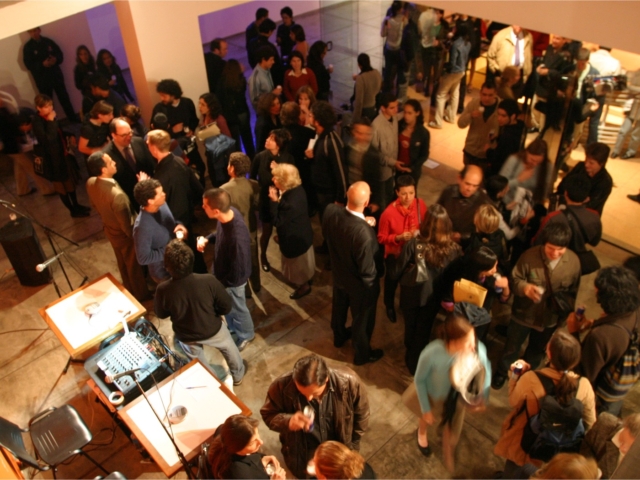
Mauricio Delfin is a Brooklyn-based artist whose practice examines the political systems that govern cultural life through installation, documentary, and participatory works.
Artist Statement
My practice takes cultural governance as its direct subject. For over a decade, I worked within and alongside the institutions this work now examines: building civic platforms, advocating for cultural policy reform, mapping who participates in cultural life and who is excluded. That knowledge of how power circulates through cultural systems, through data, bureaucracy, and funding decisions, is the material I bring into the studio.
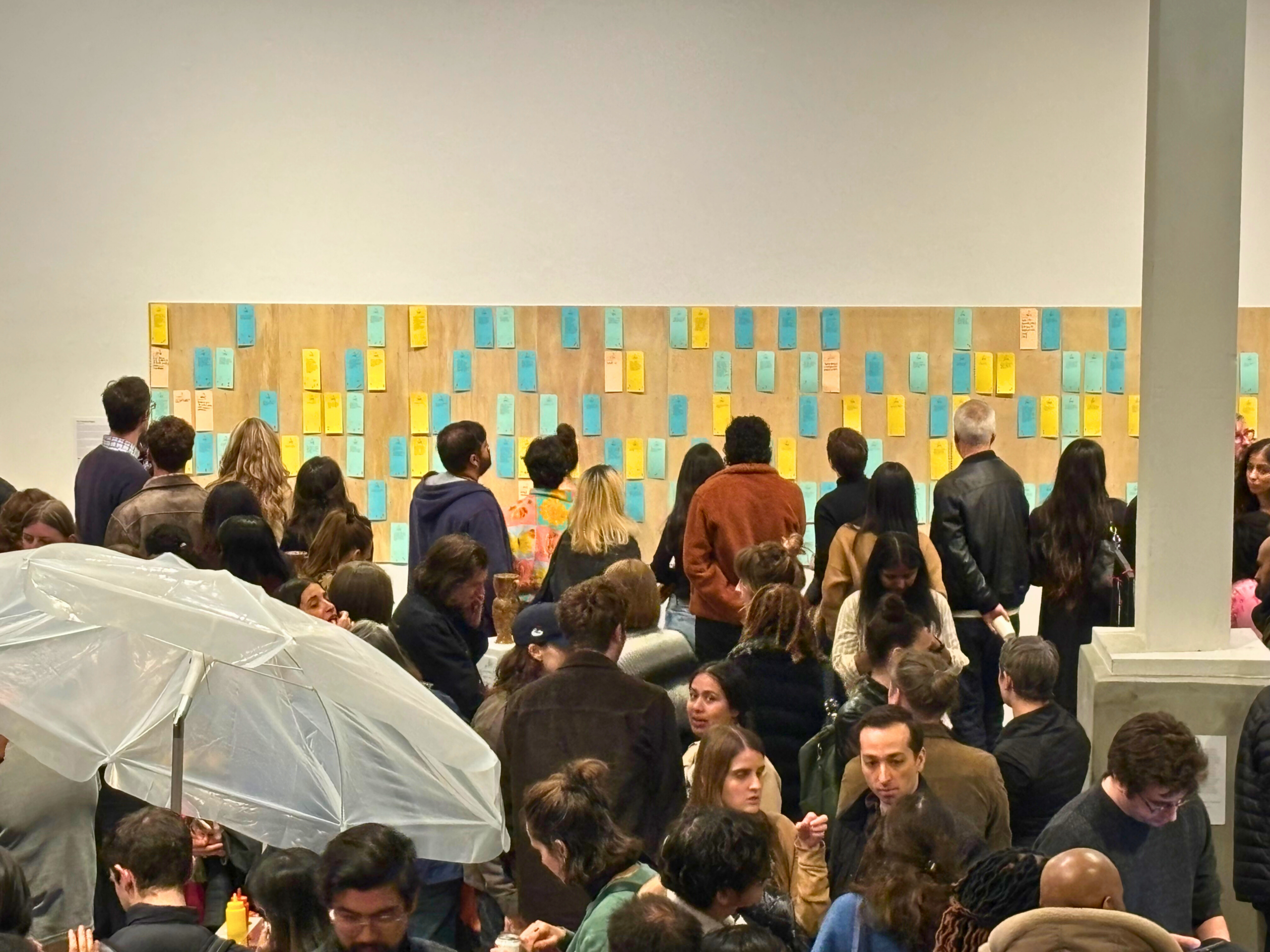
The Timelines Project (2017–ongoing) grows from that experience. Through workshops, communities collectively reconstruct histories of cultural advocacy, mapping the events that shaped their civic engagement onto handmade punch cards. These are digitized into open datasets and assembled into modular installations where multiple community timelines intersect. The work asks whose version of cultural history gets preserved, and whose disappears.
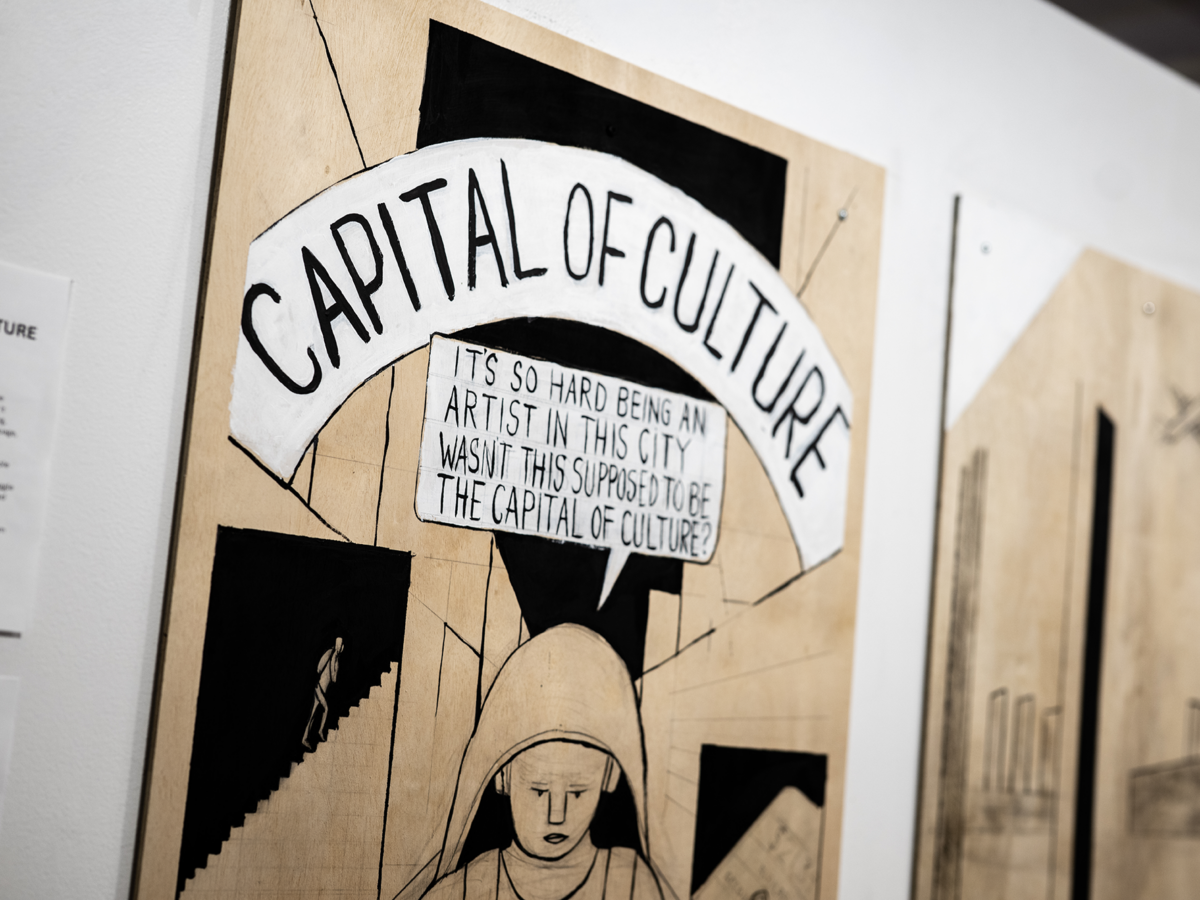
Capital of Culture extends this inquiry to New York City. Drawing on the city’s own cultural policy data, institutional timelines, and civic testimony, the project materializes the gap between a city that calls itself the global capital of culture and the structural precarity its artists and organizations actually face.
Recent exhibitions
- BRIC Brooklyn (September 2026)
- DUMBO Open Studios (June 2026)
- Data Through Design 2025 “Corpus: Bodies of Data” (March 2025)
Capital of Culture
Mixed media installation. Currently in development.
New York City calls itself the capital of culture. Capital of Culture asks what that means for the thousands of artists who cannot afford to live there, and for the organizations that serve them and their local communities. This installation uses paintings and multimedia to materialize the gap between policy rhetoric and the structural conditions that shape artists’ daily survival.
Developed during a 2024–2025 residency at BRIClab Contemporary Art, Brooklyn, the project uses public data and civic testimony to examine how public investment in the arts is distributed, who benefits, and who is left behind.
Research for this project took place during a BRICLab Contemporary Art Residency Work in progress was presented at DUMBO Open Studios (April 2026).


The Timelines Project
Mixed-media installation with handmade punch cards, wooden panels, and permanent markers. Dimensions variable.
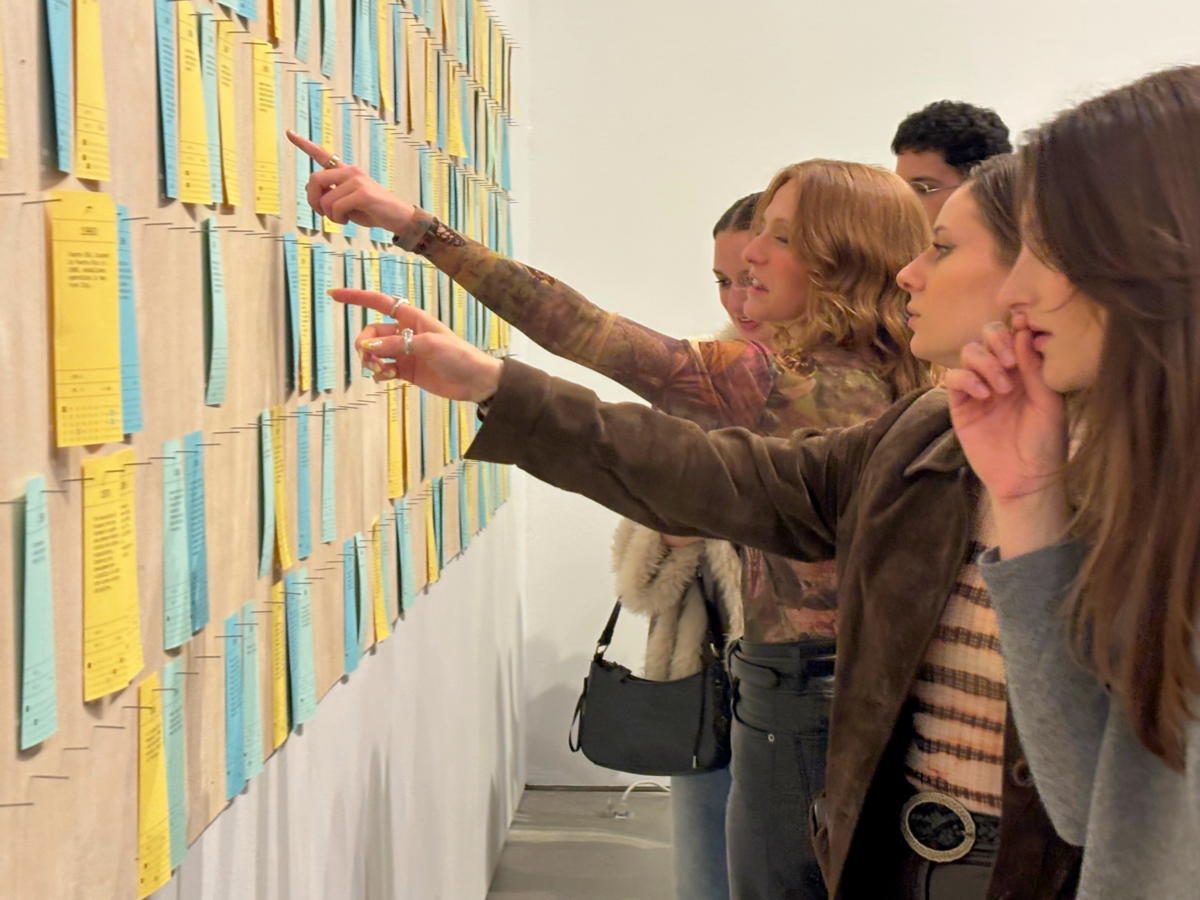
Since 2017, The Timelines Project has worked with communities to collectively reconstruct histories of cultural organizing and civic advocacy. Through workshops, participants identify the events that shaped their engagement — victories, losses, turning points, moments of collective action — and mark them onto handmade punch cards. These are later digitized and published as open datasets, making the civic knowledge accessible for reuse.
The resulting installations interweave these multiple timelines, revealing intersections between different communities’ lived histories of cultural struggle. The work asks whose version of cultural history is preserved and whose disappears, and proposes a form of collective knowledge-making that resists the neutrality claimed by official datasets.
Workshops have been conducted with Shinnecock tribal members at Ma’s House (2025), the Latinx Arts Consortium of New York at The Clemente (2023), and New Yorkers for Culture and Arts on Governors Island (2023). An installation was exhibited at BRIC House Gallery, Brooklyn, March–April 2025.
The project’s concept grew out of my work in advocacy, data stewardship, and civic facilitation.


VIVO
2008. Mauricio Delfín, Jaime E. Oliver, Mauricio Delfín, José Aburto
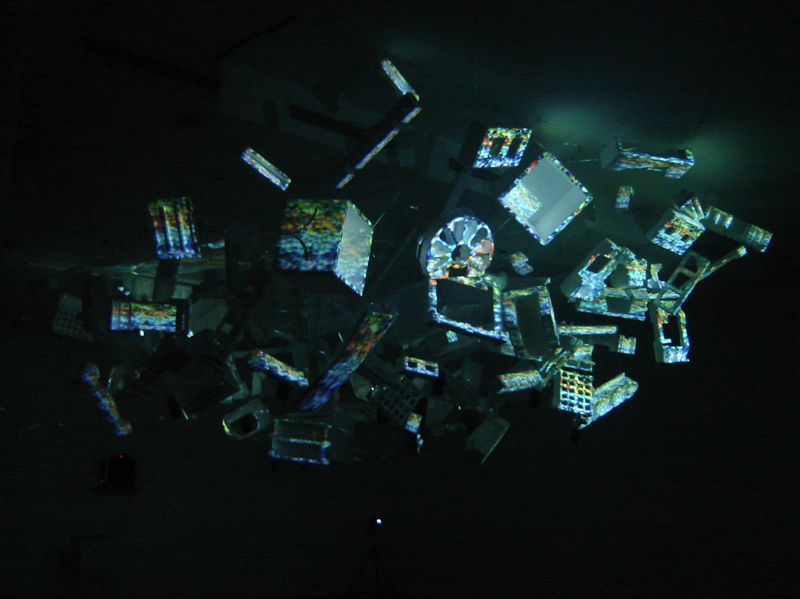
Interactive installation with recycled Styrofoam, speakers, projectors, and networked computers. Dimensions variable.
VIVO is an interactive installation that responds—partially unpredictably—to the presence of visitors. Sensors trigger evolving patterns of projected images and sound, generating continuous recombinations of audiovisual material.
The title references the video-card standard Video In–Video Out (VIVO), suggesting a mediated form of life defined by the circulation of signals. Constructed from light, sound, and recycled materials, the installation creates what the artists describe as a non-organic vital aura—a system that reacts to its surroundings in real time.

Noqanchis (all of us)
2006. Mauricio Delfin
Documentary video. 35 min.
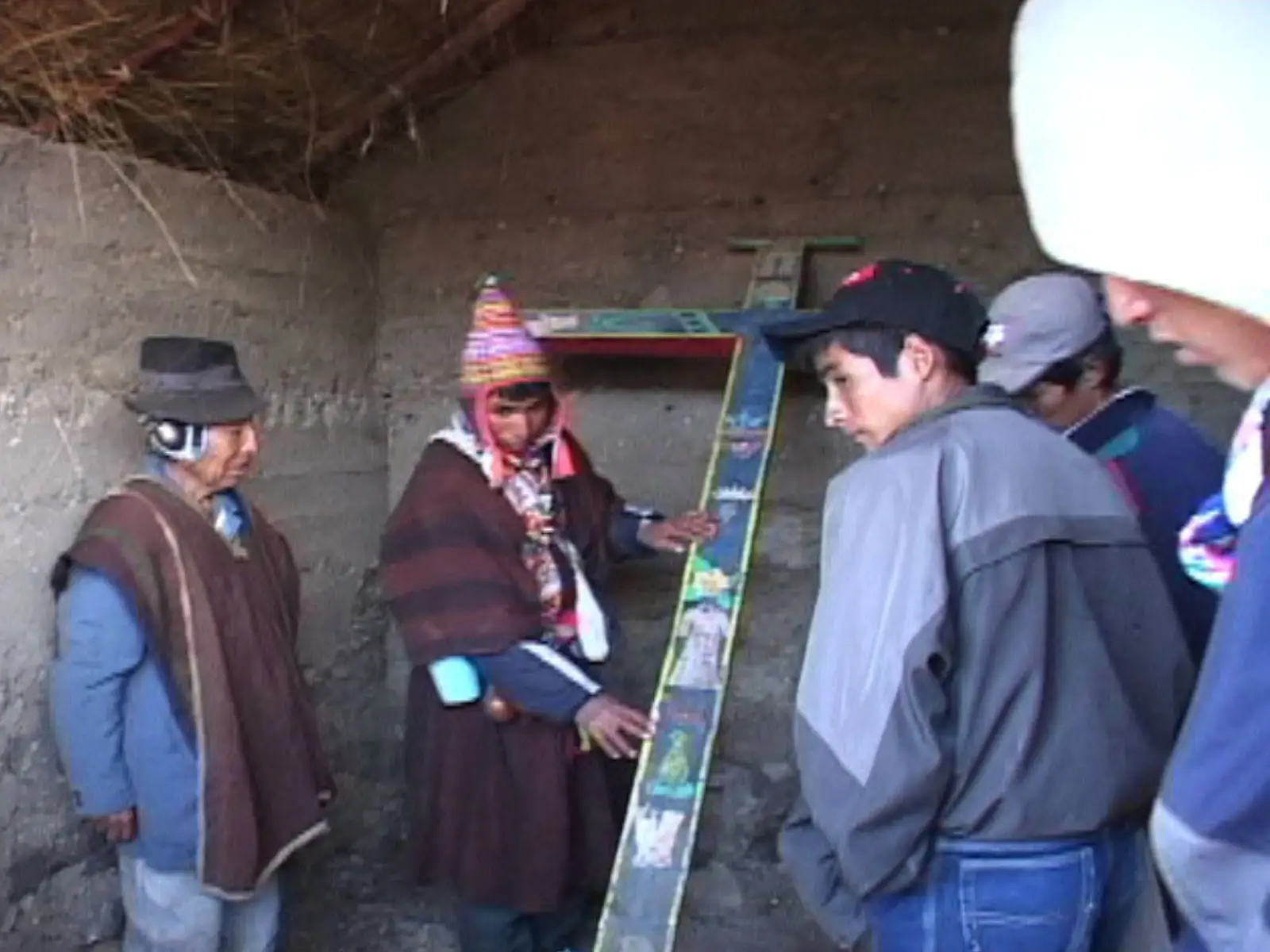
Noqanchis (All of Us) documents life in a Quechua-speaking community in the highlands of Ayacucho, Peru, a region deeply affected by political violence during the 1980s and 1990s. The film follows families in the community of Chaca as they prepare for the Fiesta de las Cruces, a religious celebration that brings residents together.
Through informal conversations and everyday scenes, the documentary centers the voices of community members as they reflect on memory, suffering, hope, and resilience.
Viaje hacia la Noche (2004)
2005. Mauricio Delfin.
Documentary, 35 minutes
This experimental documentary celebrates the life and poetry of the Peruvian poet César Moro (1903–1956), a singular figure in Latin American surrealism. Filmed in Mexico, Peru, France, and the United Kingdom, the film traces Moro’s elusive presence across places that shaped his life and artistic imagination.
Through interviews with writers, artists, and scholars—including Mexican artist Juan Soriano and Nobel laureate Mario Vargas Llosa—the film reconstructs fragments of Moro’s story. Testimonies, archival materials, and poetic interpretations evoke a figure remembered as brilliant, enigmatic, and deeply influential.
Moving between biography and poetic reflection, the documentary approaches Moro through absence as much as presence. Landscapes, memories, and voices assemble a portrait of an artist whose work continues to resonate across languages and generations.


Paradise on Earth
2004. Directed by Santi Zegarra.
Video by Mauricio Delfin.
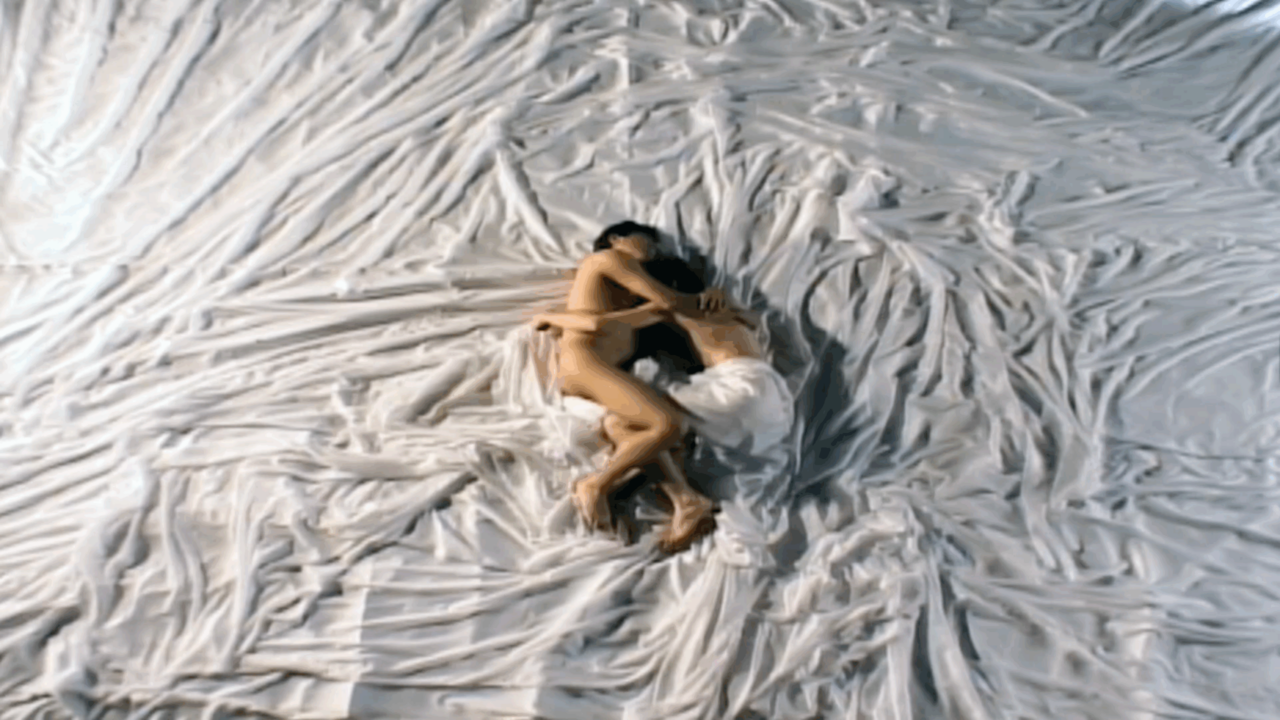
A video installation on the Brazil-nut global economy and its impact on the people of Puerto Maldonado.


Audiovisual Essays
2003. Directed by Jaime E. Oliver.
Video by Mauricio Delfin.
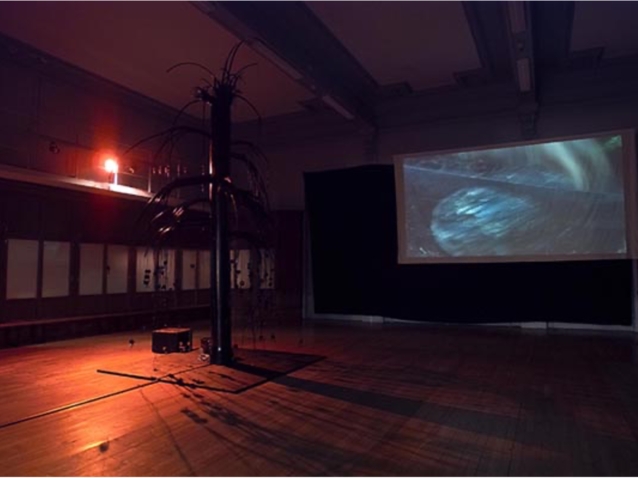
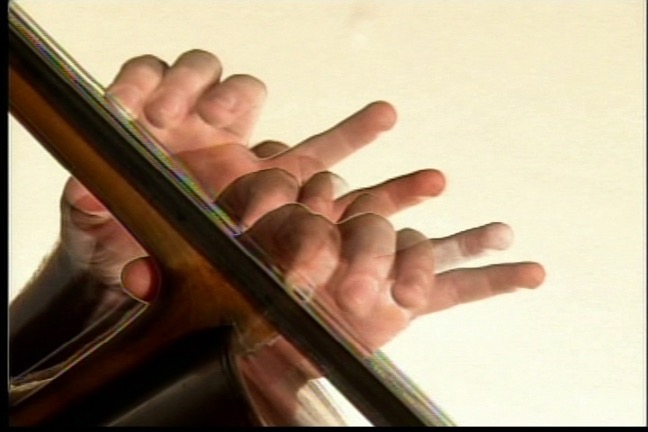
Three audiovisual essays exploring how musical interpretation and instrumentation can be expanded by media.


2/2/2
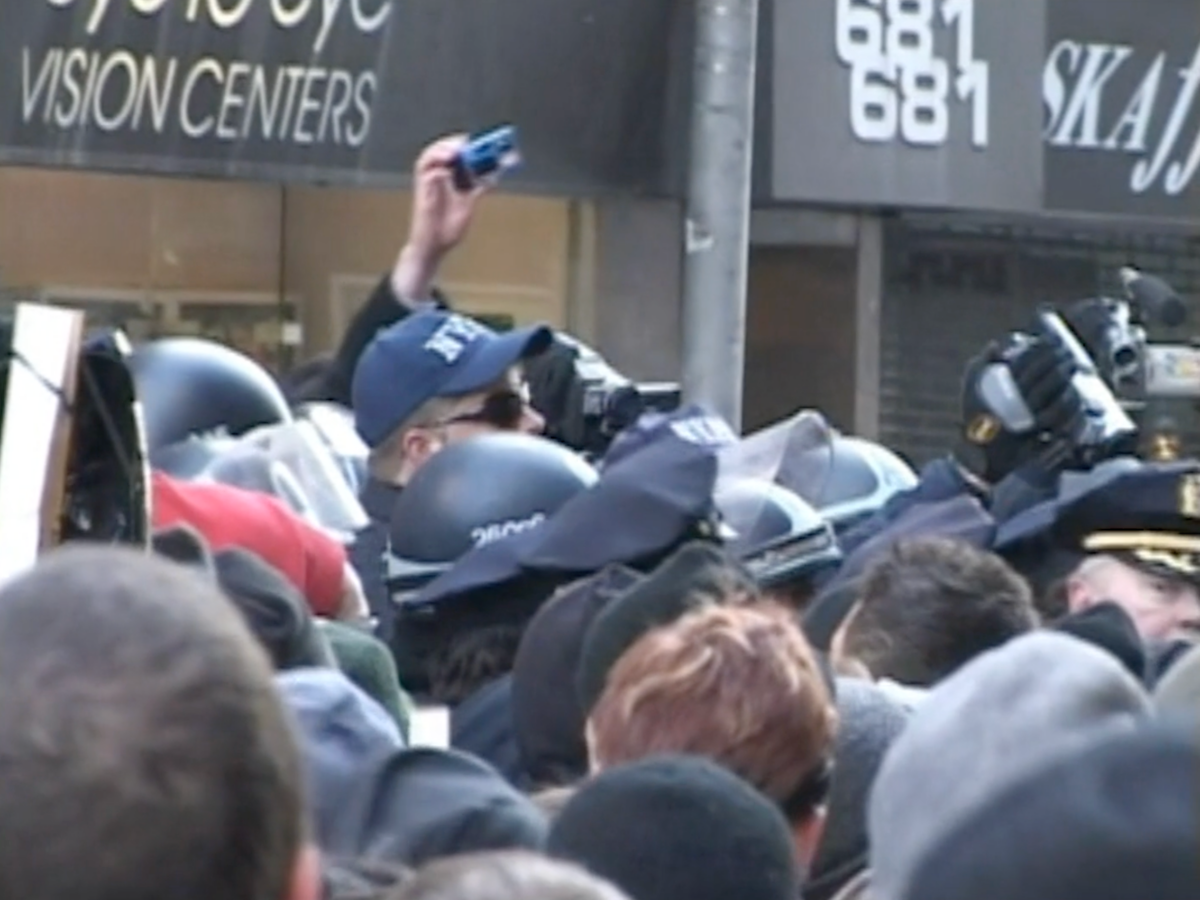
2002. Directed by Mauricio Delfin. Music by Jaime Oliver.
A walk through New York during the protests against the World Economic Forum on February 2nd, 2002, exploring the sights and sounds of civic tension.


CURATORIAL PRACTICE
#Multitudes
2011. Group Exhibition, Co-Curator with Kiko Mayorga
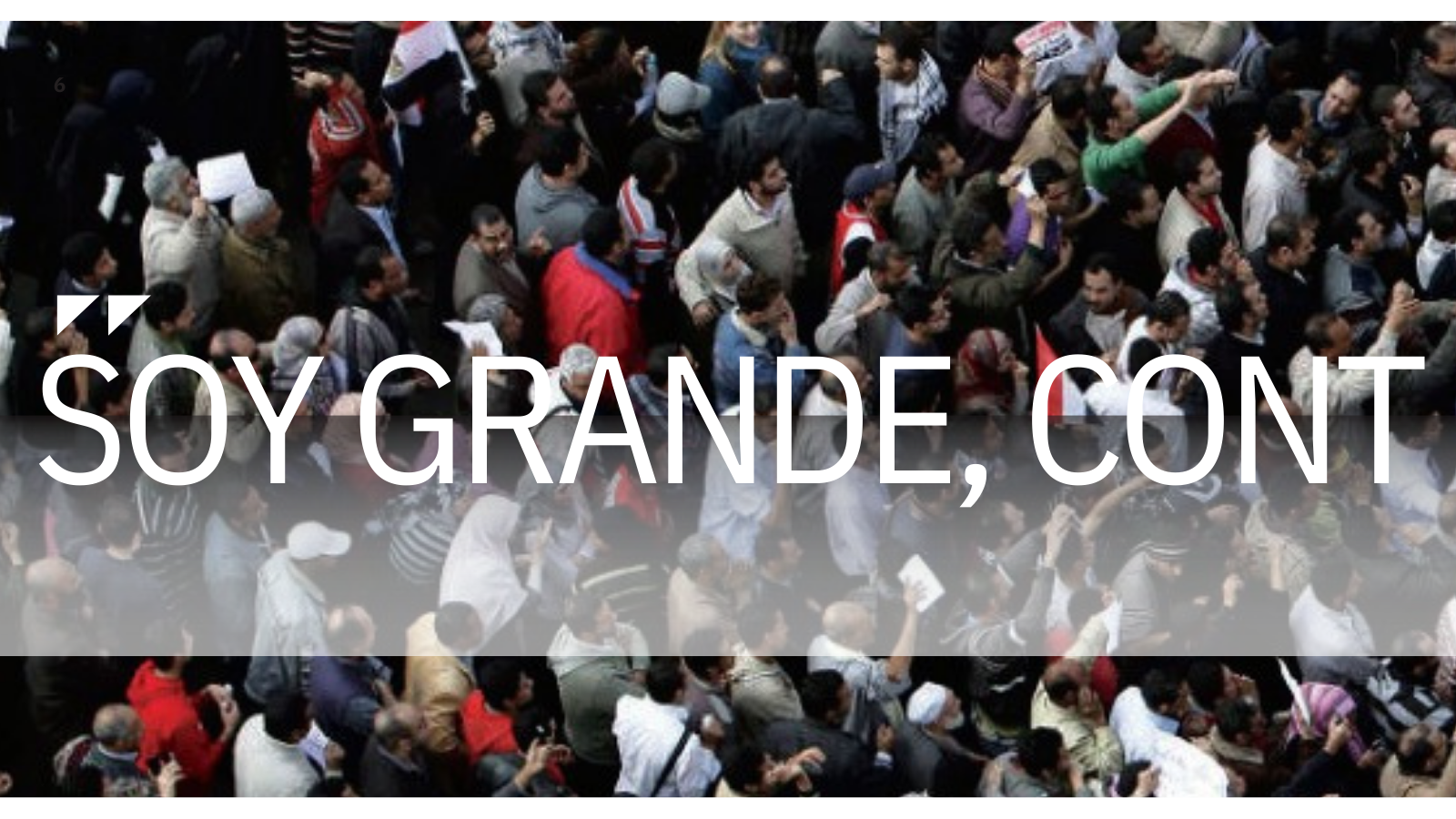
The internet is often described as a network of networks—a vast system of protocols, standards, and infrastructures connecting millions of people and communities. Within this distributed environment, diverse cultures interact across overlapping public spheres, even as these spaces depend on privately owned technological infrastructures. Rich in metaphors of connection and community, the network contains multitudes: plural voices that inhabit and transform its creative, political, and economic possibilities.
Yet digital networks are not inherently decentralized or democratic. Protocols structure flows of information and can also enable new forms of control. At a moment when debates around net neutrality, access, and digital governance are intensifying, #MULTITUDES invites us to reconsider the internet as a contested cultural space.
Through artworks, projects, and documentation from Peru, the exhibition presents a fragmentary but interconnected view of the internet as a platform for civic participation, cultural inclusion, and the collective reimagining of public life.



PLASMA: Peruvian Symposium of Art and New Media
2008–2009. Directed and produced by Mauricio Delfín
Public program, symposium, and online platform
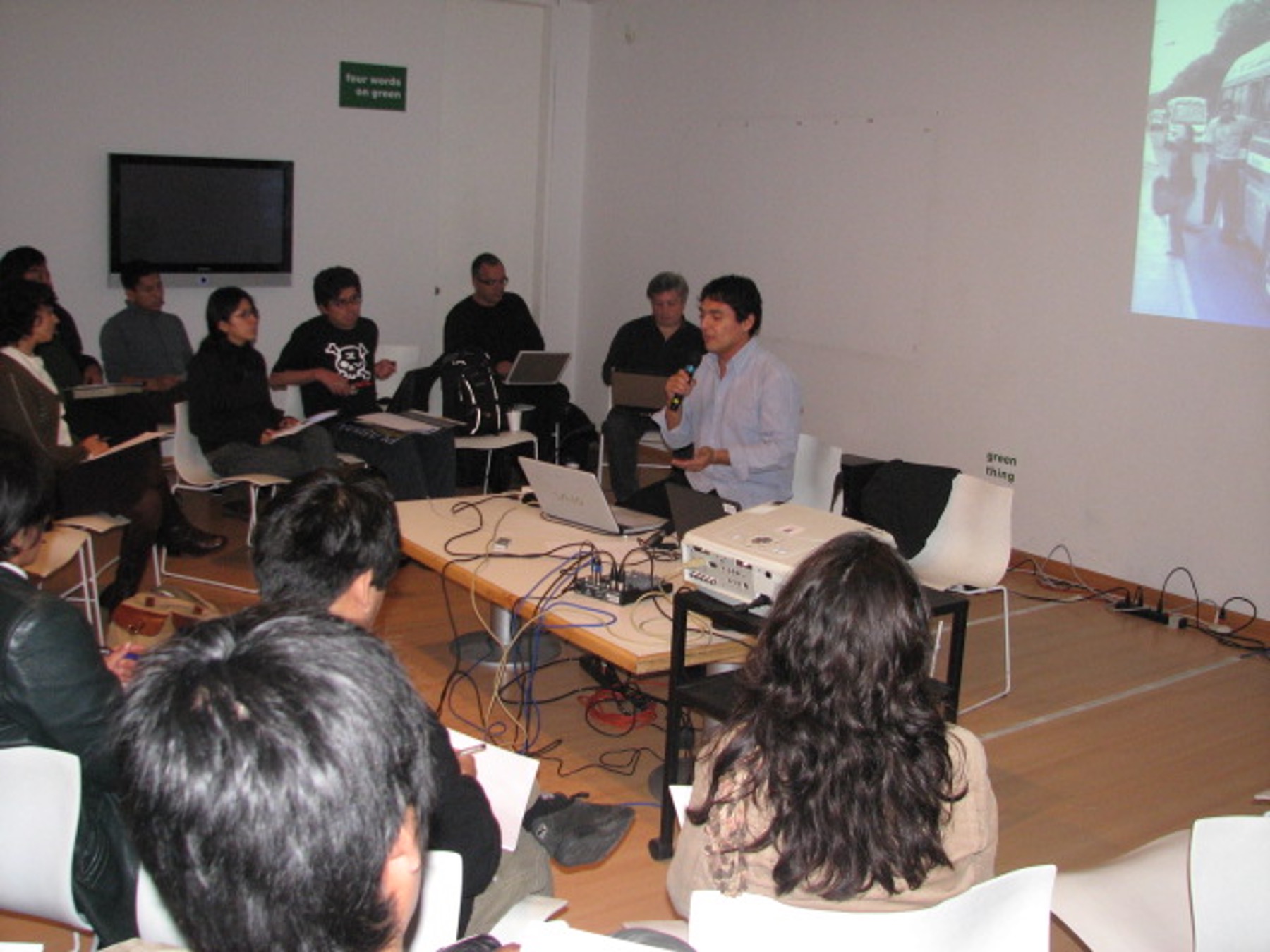
The Peruvian Symposium of Art and New Media was conceived as a platform for dialogue on research, theory, and artistic practice in emerging media in Peru. First held in 2008, the three-day symposium brought together artists, researchers, and cultural practitioners to discuss the cultural and technological transformations shaping contemporary media art.
The program included more than twenty presentations, regional facilitators from across the country, and travel grants supporting the participation of artists based outside Lima. All lectures were transmitted online and documented through a blog and publication, expanding access to discussions beyond the event itself. The symposium sought to strengthen networks among artists and researchers while fostering a national conversation on art, technology, and digital culture.
Festival de Video/Arte/Electrónica (VAE)
2004-2010. International Festival.
In 2004, Realidad Visual assumed the direction of the Festival Internacional de Video/Arte/Electrónica (VAE), originally conceived by Alta Tecnología Andina (ATA). Under this new leadership, the festival expanded beyond its founding organization to strengthen institutional frameworks for media art in Peru.
Between 2004 and 2010, Realidad Visual produced four editions of the festival across a national circuit that included Arequipa, Cusco, Lima, Trujillo, and Puerto Maldonado. This new phase focused on three priorities: decentralizing activities beyond Lima, promoting knowledge exchange among artists through workshops, and expanding the festival’s scope beyond video art to a broader field of media arts.
The festival presented the work of more than 100 national and international artists through exhibitions, conferences, workshops, concerts, forums, and publications.